Driving UX Coherence Across a Fragmented Identity Ecosystem
TL;DR
Role: Senior UX Researcher
Focus: Identity coherence across resume ingestion, credentialing, and secure login workflows
Methods: Heuristic audits, SUS scoring, usability testing, rapid feedback loops, A/B evaluations, coherence audits, research systemization
Impact: Systematized UX evaluation, built coherence audit infrastructure, and drove measurable usability improvements across security and identity tools
Project Context
Microsoft’s identity infrastructure spans dozens of products, from login tools to profile imports and credentialing flows. Without a cohesive UX strategy, user journeys across these tools became fragmented, inconsistent, and hard to evaluate systematically. I was brought in to streamline evaluation efforts and unify the user experience across identity workflows. My research spanned:
Profile Import Workflows: Testing the usability of new resume and profile ingestion methods
Credential Interfaces: Evaluating how users interact with visual and textual trust indicators
Secure Login Flow: Measuring trust, completion, and learnability in next-generation passwordless authentication
Cross-Platform Consistency Audits: Identifying UX divergence across devices, tools, and teams
The broader goal was to move from isolated research to a cohesive system of evaluation that uncovered systemic UX friction and supported design standardization.
The Challenge
Microsoft’s identity tools evolved organically, optimized by different teams at different times. While the individual tools functioned well in isolation, their lack of alignment at a system level created challenges for users and design teams alike. Key issues included:
Inconsistent interaction models: Common actions like scan, approve, and verify behaved differently across flows
Unclear visual affordances: Icons and copy lacked shared standards, leading to user confusion
Fragmented evaluation methods: UX research was siloed, with no unified system for comparison or re-use
Platform-specific drift: Secure login flows varied significantly across desktop, mobile, and browser contexts
Lack of systemic oversight: No formal audit process to detect, measure, or correct cross-tool UX misalignments
My Role & Research Approach
I led end-to-end evaluative research across the identity product suite, focusing on operational efficiency, cross-surface consistency, and measurable usability improvements. My work emphasized repeatability, strategic insight, and tactical clarity. Research activities included:
Usability Testing + Benchmarking
Tested user flow learnability, onboarding friction, and task confidence
Generated usability benchmarks using SUS and customized Likert evaluations
A/B Testing + Flash Feedback
Conducted comparative studies on trust signals (e.g., icons vs. labels) and flow clarity
Cross-Platform Coherence Audits
Identified UX drift across mobile, browser, and OS-level interfaces
Documented inconsistencies in navigation, terminology, and visual structure
Strategic Research Planning
Mapped friction across systems using service blueprinting
Designed research playbooks and artifact libraries for future reuse
System Operationalization
Created reusable templates for studies, screeners, and reports
Standardized research handoff formats and stakeholder deliverables
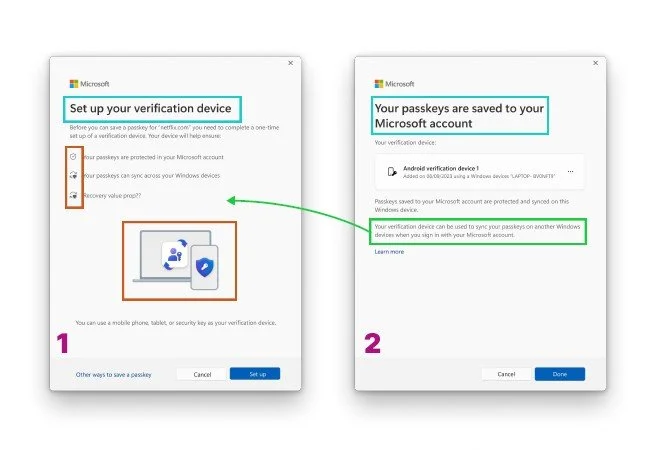
Evaluative A/B Tests
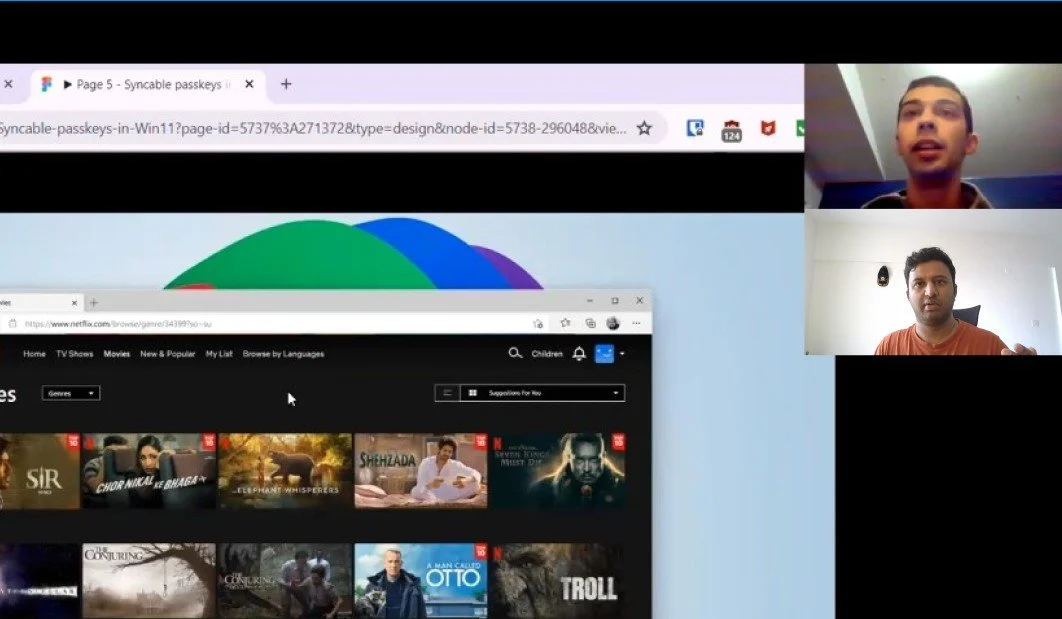
Evaluative UX Cohesion Tests
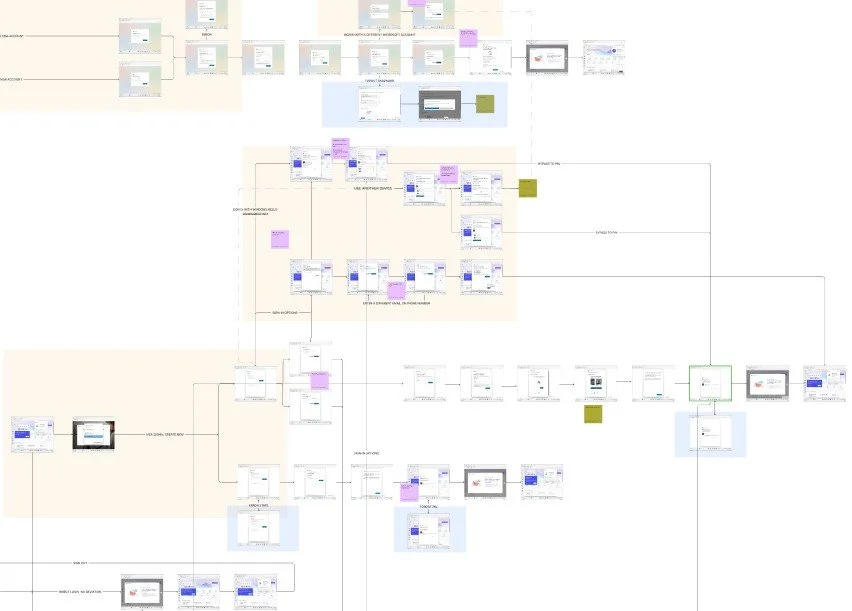
Large Scale Coherence Audit
Key Insights
Clarity Outperformed Creativity: Standard, familiar visual elements consistently drove better task performance than novel ones
Visual Inconsistencies Eroded Trust: Even small deviations in button styles or terminology disrupted user confidence in secure tasks
Evaluation Gaps Slowed Learning: Teams worked in parallel, often testing similar things without alignment or shared metrics
Overestimated Technical Literacy: Security flows assumed users understood authentication logic better than they did
Impact & Outcomes
Established a Research System: Created a repeatable, scalable evaluation process for identity UX
Improved Completion Rates: Iterative refinements to secure login flows and profile ingestion interfaces led to measurable usability gains
Reduced UX Drift: Consistency audits prompted multiple cross-team alignment efforts and helped refine shared UI standards
Elevated Research Influence: Deliverables such as service blueprints and test plans were reused by other teams beyond the immediate group